Can Periodontitis Cause Heart Problems? Understanding the Link Between Gum Disease and Heart Health
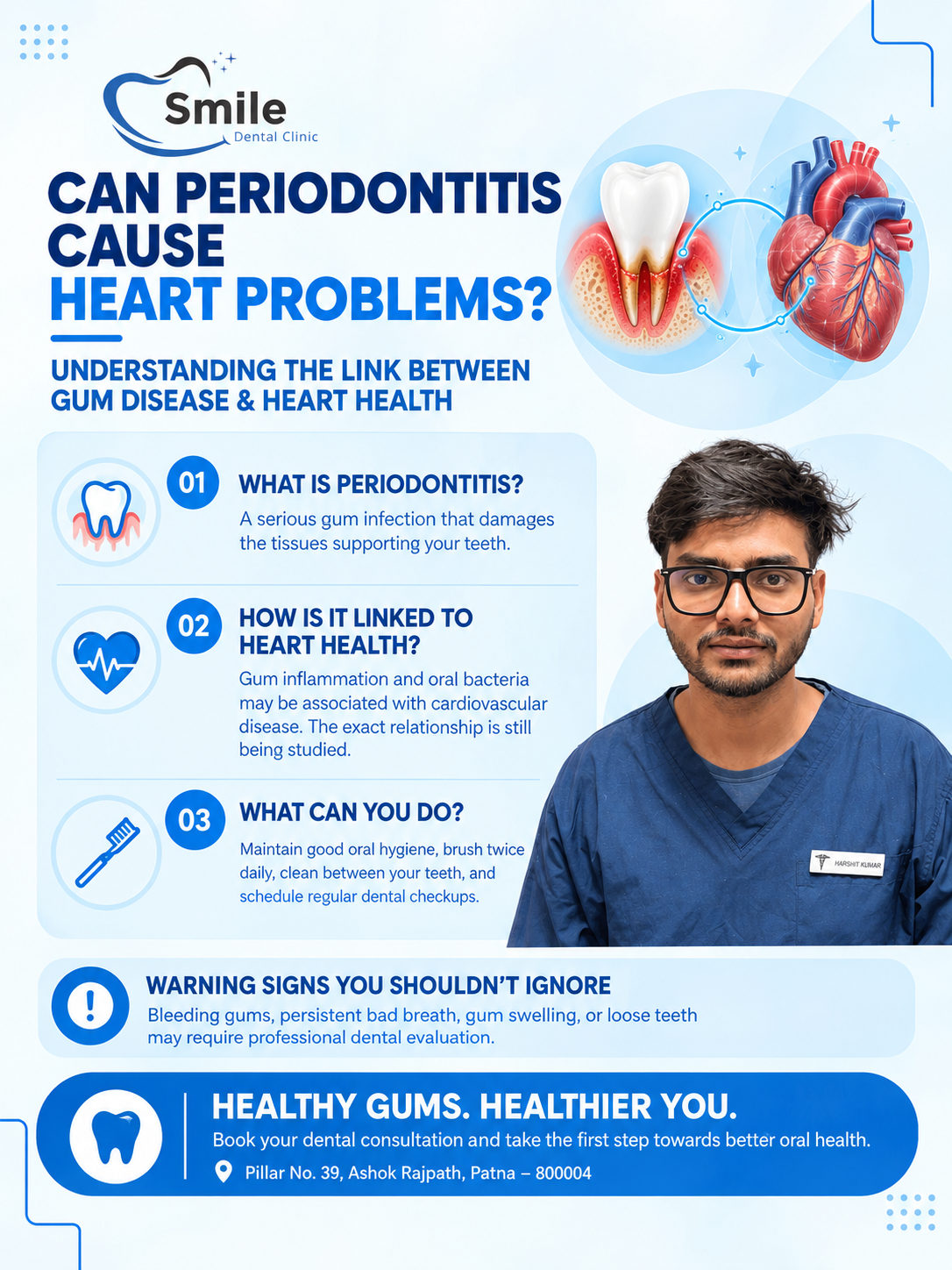
Can Periodontitis Cause Heart Problems? Understanding the Link Between Gum Disease and Heart Health
Introduction
Did you know that the health of your gums may be connected to the health of your heart?
Many people think that dental problems affect only their teeth and gums. However, research suggests that periodontitis, a severe form of gum disease, is associated with an increased risk of cardiovascular disease. The American Heart Association's updated scientific statement highlights this connection while noting that a direct cause-and-effect relationship has not yet been established.
Understanding this relationship can help you take better care of both your oral health and your overall well-being.
What Is Periodontitis?
Periodontitis is a chronic inflammatory condition affecting the gums and the bone that supports your teeth. It usually develops when plaque—a sticky film containing bacteria—accumulates around the teeth and is not adequately removed.
Over time, the gums may become inflamed, separate from the teeth, and form pockets where bacteria collect. As the disease progresses, it can damage the supporting bone and cause teeth to become loose.
Common signs of periodontitis
Bleeding gums while brushing or flossing
Red, swollen, or tender gums
Persistent bad breath
Receding gums or teeth appearing longer
Loose teeth or discomfort while chewing
Changes in the way your teeth fit together
Periodontitis can progress with few noticeable symptoms, so regular dental checkups are important. [2]
How Is Periodontitis Linked to Heart Problems?
Researchers have identified several possible pathways connecting gum disease with cardiovascular health.
1. Bacteria may enter the bloodstream
Inflamed gum tissue can provide a route for oral bacteria and their products to enter the bloodstream, particularly when the gum tissue is damaged or bleeds. This may contribute to inflammatory responses elsewhere in the body.
2. Chronic inflammation may affect blood vessels
Periodontitis can cause persistent inflammation. Researchers are investigating whether inflammatory substances associated with gum disease may contribute to changes in the lining of blood vessels and the development of atherosclerosis, in which fatty deposits accumulate in artery walls. [1]
3. Gum disease and heart disease share risk factors
Conditions and habits such as smoking, diabetes, obesity, and older age can increase the likelihood of both periodontal disease and cardiovascular problems. These shared risk factors make the relationship complex.
Important: Periodontitis is associated with heart disease, but current evidence does not establish that gum disease directly causes heart attacks or strokes. It is also not yet proven that treating periodontitis prevents these cardiovascular events. [1, 3]
Who Should Pay Particular Attention to Gum Health?
Everyone should maintain good oral hygiene, but people with the following risk factors should be especially attentive:
Diabetes or poorly controlled blood sugar
Smoking or tobacco use
A history of gum disease
Persistent gum bleeding or swelling
High blood pressure or known cardiovascular disease
Infrequent dental checkups
If you have heart disease and gum problems, inform both your dentist and your medical doctor so that your care can be coordinated appropriately.
How Can You Protect Your Gums and Support Heart Health?
Although dental treatment cannot guarantee protection against heart disease, maintaining healthy gums is an important part of general health.
1. Brush twice daily
Use a soft-bristled toothbrush and fluoride toothpaste. Brush gently along the gumline to remove plaque without damaging the gums.
2. Clean between your teeth daily
Use dental floss or suitable interdental brushes to clean areas that a toothbrush cannot reach.
3. Get professional dental cleaning
Hardened plaque, known as tartar or calculus, cannot be removed by brushing alone. A dentist may recommend professional scaling and, when needed, deeper periodontal treatment.
4. Stop smoking and tobacco use
Smoking increases the risk of periodontal disease and cardiovascular disease. Seeking support to quit can benefit both oral and general health.
5. Manage diabetes and other health conditions
Follow your medical team's advice for managing blood sugar, blood pressure, cholesterol, and other cardiovascular risk factors.
6. Schedule regular dental checkups
Your dentist can examine your gums, assess periodontal pockets, and recommend treatment before the disease causes further damage.
Can Treating Gum Disease Prevent a Heart Attack?
This is one of the most common questions about the connection between oral health and heart health.
Treating periodontitis helps control the gum infection and inflammation and can protect the tissues supporting your teeth. Some studies have also reported improvements in certain markers related to vascular health after periodontal treatment.
However, there is not yet conclusive evidence that periodontal treatment prevents heart attacks or strokes. Dental care should complement—not replace—medical measures such as blood pressure management, cholesterol control, smoking cessation, exercise, and prescribed medication. [1]
When Should You Visit a Dentist?
Do not ignore bleeding gums, persistent bad breath, gum recession, or loose teeth. These may be signs of periodontal disease that need professional assessment.
If you experience chest pain or pressure, sudden shortness of breath, fainting, or other possible heart attack symptoms, seek emergency medical care immediately rather than waiting for a dental appointment.
Conclusion
Your gums and your heart may be more closely connected than you think. Research continues to identify an association between periodontitis and cardiovascular disease, although the precise relationship is still being studied.
Maintaining good oral hygiene, treating gum disease early, avoiding tobacco, and attending regular dental checkups can help protect your oral health and support your overall well-being.
At Smile Dental Clinic, we believe that a healthy smile begins with healthy gums. If you notice bleeding gums, persistent bad breath, or loose teeth, arrange a dental checkup to understand the cause and discuss appropriate treatment.
Frequently Asked Questions (FAQs)
1. Can periodontitis cause a heart attack?
Periodontitis is associated with cardiovascular disease, including heart attack, but a direct causal relationship has not been established.
2. Can bleeding gums affect heart health?
Bleeding gums may indicate inflammation or gum disease. Persistent bleeding should be evaluated by a dentist. Research is investigating how gum inflammation may be related to cardiovascular health.
3. Does scaling help protect the heart?
Scaling helps remove plaque and tartar and is an important part of treating gum disease. It has not been conclusively shown to prevent heart attacks or strokes.
4. How often should I visit a dentist?
The appropriate interval depends on your oral health and risk factors. Your dentist can recommend a schedule based on your individual needs.
5. Is periodontitis reversible?
Early gum inflammation (gingivitis) can often be reversed with effective plaque control and professional cleaning. Periodontitis can generally be managed, but lost supporting bone may not fully regenerate without specific treatment.