Dental Implants vs. Dentures: Which Is Better for You?
Dental Implants vs. Dentures: Which Is Better for You?
personalizedMissing teeth can affect more than just your smile. They can make chewing difficult, affect speech, and reduce your confidence. Fortunately, modern dentistry offers effective solutions to replace missing teeth, including dental implants and dentures.
But which option is better for you? The answer depends on your oral health, budget, lifestyle, and long-term dental goals.
In this guide, we’ll compare dental implants and dentures based on stability, comfort, maintenance, treatment time, and cost to help you make an informed decision.
What Are Dental Implants?
Dental implants are artificial tooth roots, usually made of titanium, that are placed into the jawbone through a surgical procedure. Once the implant integrates with the bone, it can support a dental crown, bridge, or implant-supported denture.
Dental implants are designed to provide a stable, natural-looking replacement for missing teeth. They can also help preserve the jawbone by providing stimulation during chewing.
Benefits of dental implants:
Provide excellent stability during eating and speaking.
Feel similar to natural teeth once fully restored.
Do not require support from adjacent teeth for a single-tooth replacement.
Can help reduce bone loss in the area of the missing tooth.
Can last many years with proper care and regular dental check-ups.
However, implants require adequate bone support and healthy gums. Some patients may need additional procedures, such as bone grafting, before implant placement.
What Are Dentures?
Dentures are removable dental appliances used to replace missing teeth. Depending on how many teeth are missing, a dentist may recommend partial dentures or complete dentures.
Partial dentures replace some missing teeth, while complete dentures replace all teeth in the upper or lower jaw.
Dentures are generally less invasive than dental implants and can be a practical option for patients seeking a more affordable tooth replacement solution.
Benefits of dentures:
Usually have a lower initial cost than dental implants.
Can replace several or all missing teeth.
Do not usually require implant surgery.
Can often be provided in a shorter treatment period.
Can be adjusted, repaired, or replaced when necessary.
Traditional dentures may move while eating or speaking, and they may require adjustments as the shape of the jaw and gums changes over time.
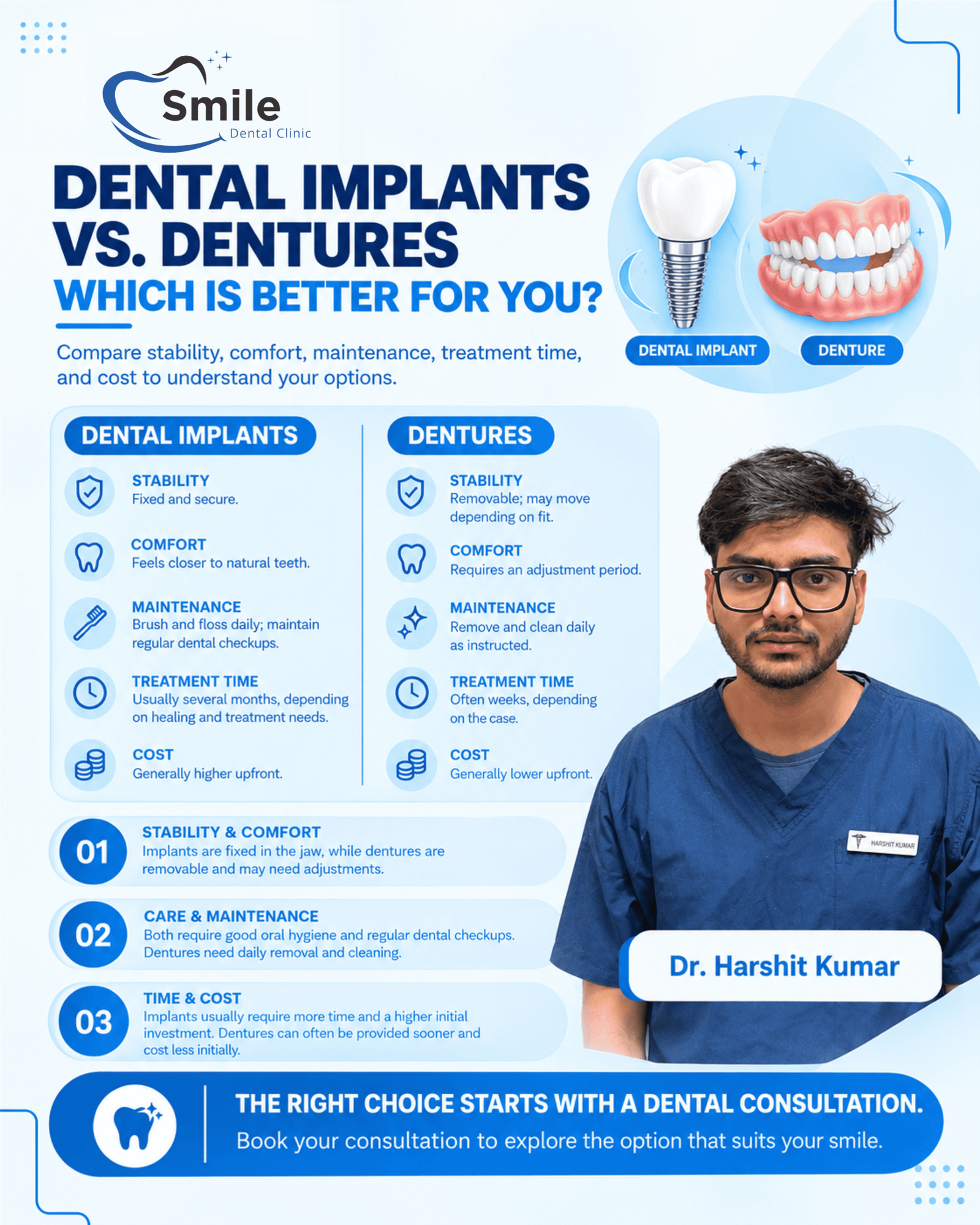
Dental Implants vs. Dentures: Key Differences
Feature | Dental Implants | Traditional Dentures |
|---|---|---|
Stability | Fixed and highly stable | May move or slip |
Comfort | Feel natural after healing. | May need an adjustment period |
Appearance | Can look very natural | Can also look natural when properly made |
Maintenance | Brushing, flossing, and professional care | Daily cleaning and removal |
Treatment time | Often several months | Often weeks, depending on the case |
Surgery | Usually required | Usually not required |
Bone health | Helps maintain bone around the implant | Does not prevent underlying jawbone shrinkage |
Initial cost | Generally higher | Generally lower |
Long-term care | May need crown or component repairs | May need relining, repair, or replacement |
1. Stability: Which Option Stays in Place Better?
Dental implants generally offer greater stability. Because they are anchored in the jawbone, they do not normally move during chewing or speaking once treatment is complete.
Traditional dentures rest on the gums and rely on their fit, the shape of the jaw, and sometimes denture adhesive for retention. They may loosen over time as the jawbone changes.
For patients who want removable teeth with improved stability, implant-supported dentures may offer a middle ground. These dentures attach to implants but may still be removable for cleaning, depending on the design.
2. Comfort: Which Feels More Natural?
Dental implants can feel more like natural teeth once the surrounding tissues have healed and the final restoration is fitted. They do not cover the palate in the way some upper dentures do.
Dentures can also be comfortable, but new wearers may need time to adjust. Some experience sore spots, increased saliva, difficulty speaking clearly, or discomfort while chewing.
A well-fitted denture can provide good function, and regular adjustments can improve comfort.
3. Maintenance: How Do You Care for Them?
Both options need daily care to maintain oral health.
Dental implant care
Brush twice daily with a soft-bristled toothbrush.
Clean between teeth and around implants using suitable floss or interdental aids.
Attend regular dental check-ups and professional cleaning.
Avoid smoking and follow your dentist’s advice to reduce the risk of implant complications.
Denture care
Remove and clean removable dentures daily.
Clean your gums, tongue, and any remaining natural teeth.
Follow your dentist’s instructions for overnight storage and soaking.
Have dentures checked regularly for fit and arrange adjustments when needed.
Remember: implants cannot develop tooth decay, but the gums and bone supporting them can still develop disease. Good oral hygiene remains essential.
4. Treatment Time: How Long Does Each Option Take?
Traditional dentures can often be made within a few weeks, although the exact time depends on the case, dental laboratory work, extractions, and healing.
Dental implant treatment usually takes longer. After implant placement, the implant may need several months to integrate with the jawbone before the final crown or denture is fitted. Some patients may qualify for immediate temporary teeth, but this depends on clinical conditions and implant stability.
If teeth have recently been extracted, the dentist may also recommend allowing the gums or bone to heal before proceeding with certain treatments.
5. Cost: Which Is More Affordable?
Dentures generally have a lower initial cost, making them a suitable choice for patients working within a limited budget.
Dental implants usually involve a higher upfront investment because treatment may include implant placement, the abutment, the crown or denture, imaging, and additional procedures if needed.
In India, prices vary considerably between clinics, materials, the number of teeth being replaced, and the complexity of treatment. Rather than relying on a single advertised price, ask for a complete treatment estimate.
It is also worth considering long-term expenses. Dentures may require periodic relining or replacement, while implant restorations may eventually need repairs or replacement of certain components.
Which Option Is Better for You?
There is no single best solution for everyone.
Dental implants may suit you if:
You want a fixed tooth replacement.
You have adequate bone support or are suitable for preparatory treatment.
Your gums and general health allow implant surgery.
You are comfortable with a higher initial cost and longer treatment time.
Dentures may suit you if:
You want a more affordable initial option.
You prefer to avoid implant surgery.
You need to replace many or all missing teeth.
Your oral health, bone condition, medical circumstances, or personal preferences make removable teeth more appropriate.
If you want improved stability but need to replace many teeth, ask your dentist whether implant-supported dentures are an option.
Frequently Asked Questions
Are dental implants better than dentures?
Dental implants generally offer better stability and may help preserve bone around the implant. Dentures are usually more affordable initially and avoid implant surgery. The right choice depends on your clinical needs and preferences.
How long do dental implants last?
Dental implants can last many years, sometimes decades, with good oral hygiene and regular dental care. However, no lifespan is guaranteed, and the crown or other components may need repair or replacement.
Can dentures look like natural teeth?
Yes. Modern dentures can be designed to look natural, with tooth shapes and shades selected to suit the patient. Their appearance and comfort depend on the quality of the design, fit, and maintenance.
Can I switch from dentures to dental implants later?
In many cases, yes. A dentist will assess your bone volume, gum health, medical history, and denture fit to determine whether implant treatment is appropriate.
Are dental implants painful?
Implant placement is generally performed under local anesthesia. Some soreness, swelling, or discomfort may occur during recovery, and your dentist will provide appropriate aftercare instructions.
Conclusion
Both dental implants and dentures can restore your smile and help you eat and speak more comfortably. Dental implants offer greater stability and a fixed solution, while traditional dentures provide a more affordable and less invasive alternative.
The best choice depends on your oral health, bone condition, budget, and expectations. A dental examination can help you understand the available options and choose a treatment plan suited to your needs.
Looking for Tooth Replacement Options in Patna?
At Smile Dental Clinic, Patna, patients can discuss suitable tooth replacement options based on their dental condition and treatment goals.
Book a consultation to learn whether dental implants, dentures, or implant-supported dentures may be right for you.
Smile Dental Clinic
Address: Pillar No-39, Ashok Rajpath, Patna – 800004
Disclaimer: This article is for general educational purposes and does not replace a professional dental examination or personalised treatment advice.